Nutritious Foods for Pregnant Women During All Pregnancy Stages
Pregnancy changes the body in many ways, and food plays a major role in supporting both the mother and the baby. From the first trimester to the final weeks before delivery, the body needs the right balance of nutrients, hydration, and energy. Many women focus on eating more, but the real goal is eating smarter.
Choosing foods for pregnant women is not about following strict diets or eating expensive meals every day. It is about building balanced eating habits that support growth, immunity, digestion, and energy levels throughout pregnancy.
During the first few months, nausea and fatigue can make eating difficult. In the middle stage, appetite usually improves and nutrient needs increase. In the final trimester, foods that support strength and digestion become more important because the body is preparing for childbirth.
First Trimester: Focus on Light and Nourishing Foods
The first trimester is often the toughest stage for eating properly. Morning sickness, food aversions, bloating, and tiredness can reduce appetite. Instead of large meals, small frequent meals work better.
Some useful foods during this stage include:
- Bananas and apples for easy digestion
- Toast, poha, and khichdi for light energy
- Coconut water to stay hydrated
- Curd for gut health
- Roasted makhana and nuts for quick nutrition
- Ginger tea for nausea relief
Folic acid is extremely important during early pregnancy because it supports the baby’s brain and spinal cord development. Foods like spinach, lentils, beans, oranges, and beetroot are naturally rich in folate.
Iron-rich foods should also be included early. Low iron levels can increase weakness and tiredness. Dates, jaggery, green vegetables, and black raisins are good natural options.
Adding nutritious foods for pregnant women in the first trimester can help maintain energy levels and support healthy fetal development without putting pressure on digestion.
Second Trimester: Build Strength and Growth
The second trimester is usually more comfortable. Energy improves, nausea reduces, and appetite becomes stronger. This is the stage when the baby starts growing rapidly, so protein, calcium, and healthy fats become essential.
Protein supports tissue development and muscle growth. Good options include:
- Paneer
- Lentils
- Sprouts
- Eggs
- Tofu
- Milk and yogurt
Calcium is important for bones and teeth. Sesame seeds, milk, ragi, almonds, and curd can help meet calcium needs naturally.
Healthy fats are also necessary for brain development. Avocados, walnuts, seeds, and homemade ghee in moderation can support overall nutrition.
Many doctors recommend increasing fiber intake during this stage because constipation becomes common. Fruits, oats, vegetables, and whole grains can improve digestion and reduce discomfort.
Including Healthy foods for pregnant women during the second trimester supports steady weight gain and keeps the body strong as nutritional demands increase.
Maa Mitahara believes that traditional nutrient-rich foods can support a healthier pregnancy journey when included in balanced daily meals.
Third Trimester: Eat for Energy and Comfort
The third trimester can feel physically exhausting. The growing baby puts pressure on the stomach and digestive system, which can cause acidity, heaviness, and poor sleep.
At this stage, eating smaller meals every few hours is usually more comfortable than eating large portions.
Some helpful foods include:
- Oats and dalia for slow-release energy
- Soups and boiled vegetables for easier digestion
- Seasonal fruits for hydration
- Dry fruits in moderation for strength
- Protein-rich snacks to reduce fatigue
Hydration becomes even more important in the last trimester. Water, buttermilk, lemon water, and coconut water can help reduce swelling and tiredness.
Many women also experience leg cramps during this stage. Potassium-rich foods like bananas, sweet potatoes, and spinach may help.
Choosing foods for pregnant women during the final trimester can improve stamina and help the body prepare naturally for labor and recovery.
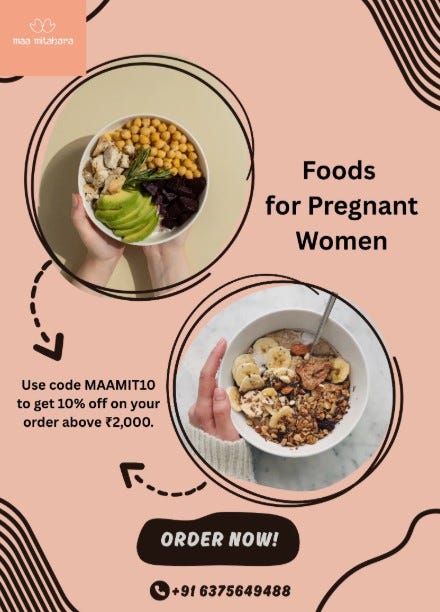
Smart Snack Ideas During Pregnancy
Snacking is completely normal during pregnancy, but the quality of snacks matters more than the quantity. Instead of chips, sugary desserts, or packaged foods, healthier snack options can provide long-lasting energy.
Some easy ideas include:
- Fruit with peanut butter
- Roasted chana
- Nuts and seeds mix
- Homemade laddoos made with dry fruits
- Yogurt with fruits
- Vegetable sandwiches
Balanced snacks help control hunger, maintain blood sugar levels, and prevent overeating during main meals.
Women who regularly eat best foods for pregnant women often feel more energetic throughout the day and experience fewer sudden cravings.
Maa Mitahara also focuses on simple and practical nutrition ideas that are easy for expecting mothers to follow in daily life.
Foods That Should Be Limited
Pregnancy nutrition is not only about what to eat. It is also about understanding what should be reduced or avoided.
Some foods that are better limited during pregnancy include:
- Excess caffeine
- Deep-fried fast food
- Raw or undercooked meat
- Unpasteurized dairy products
- High-sugar packaged snacks
- Excess soft drinks
Highly processed foods may increase bloating and unnecessary weight gain without providing real nutrition.
Moderation is important. Occasional cravings are normal, but daily eating habits should focus on balance and nourishment.
Simple Daily Pregnancy Food Routine
A healthy pregnancy diet does not need to be complicated. A simple routine can work well:
Morning
Warm water, soaked almonds, or fruit
Breakfast
Poha, oats, paratha with curd, or eggs
Mid-Morning
Coconut water or seasonal fruit
Lunch
Dal, roti, rice, vegetables, salad, and curd
Evening Snack
Makhana, sprouts, or dry fruit mix
Dinner
Light khichdi, soup, dalia, or chapati with vegetables
Before Sleep
Turmeric milk or plain warm milk
Following a routine that includes traditional foods for pregnant women can support better digestion, improved energy, and healthier eating habits throughout pregnancy.
FAQs
1. Which fruits are best during pregnancy?
Bananas, apples, oranges, pomegranates, mangoes, and berries are commonly recommended because they provide vitamins, fiber, and hydration.
2. How much protein is needed during pregnancy?
Protein needs increase during pregnancy. Lentils, dairy, eggs, nuts, and seeds are useful sources that can be included daily.
3. Is it okay to eat sweets during pregnancy?
Yes, in moderation. Homemade sweets are usually a better option than heavily processed desserts.
4. Can pregnant women skip meals?
Skipping meals is not recommended because it may cause weakness and low energy. Small frequent meals work better for most women.
5. Why is hydration important during pregnancy?
Proper hydration supports digestion, circulation, energy levels, and helps reduce common issues like constipation and fatigue.
Conclusion
Pregnancy nutrition does not need to feel stressful or restrictive. The goal is to create balanced meals that provide strength, comfort, and proper nourishment for both mother and baby. Every trimester has different nutritional needs, so listening to the body is important.
Eating fresh fruits, vegetables, whole grains, healthy fats, and protein-rich meals consistently can make a noticeable difference in energy and overall well-being. Choosing Healthy foods for pregnant women regularly supports a smoother and healthier pregnancy journey while helping mothers feel stronger every day.
Maa Mitahara encourages expecting mothers to focus on mindful eating, balanced nutrition, and wholesome ingredients throughout pregnancy.
Read More:


Comments
Post a Comment